
Post From Expert Insights
Share this post!


In the Bordeaux neighborhood of North Nashville, a new community-driven model is taking shape, grounded in the lived experiences, memories, and hopes of the people who call Bordeaux home. Faced with the same urgency of health, displacement, and equity challenges reshaping rapidly developing neighborhoods across the country, local leaders have been cultivating a new model of cross-sector collaboration. Through the Big Bold Bordeaux Vision (3BV), partners are reimagining what community ownership can look like when local leaders work together to forge permanent opportunities for shared prosperity and health.
A recent 3BV cross-sector gathering, supported by BHPN and Co-Create Health, deepened alignment, strengthened momentum, and reinforced collective commitment to a transformative, community-owned future. The convening brought together diverse partners—from government and healthcare to philanthropy with community—to anchor a long-term vision in the wisdom of local residents and surface lessons to launch the journey to develop a replicable blueprint for place-based initiatives nationwide.
The Urgent Call for a New Vision
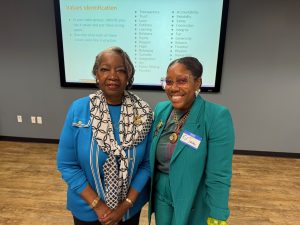
3BV Founder Vickie Harris (left) and consultant Kia Jarmon collaborating.
Across Nashville, and in communities nationwide, rapid development has intensified displacement, strained neighborhood cohesion, and exacerbated health and economic inequities. In North Nashville, for example, the child poverty rate stands at 42%, dramatically higher than the national average of 14%. Similarly, in Bordeaux, the poverty rate is 20.7%, compared to 13.5% across Tennessee and 10.6% nationally. Local leaders understand that the impacts of these pressures demand transformative leadership to spur local ownership, cultivate opportunity, and align long-term development with community-defined priorities. 3BV founder Vickie Harris recognizes the urgency of the moment, emphasizing, “transformation is not a spontaneous event we wait for; it is an intentional, sustained process of building new systems for health and equity.”
The 3BV effort is pursuing a core innovation: a Whole-Community Land Trust, an evolution of the traditional Community Land Trust (CLT) model that extends beyond affordable housing to include economic inclusion, youth leadership, and cultural preservation. This approach aims to serve as a new blueprint for place-based health equity rooted in community ownership and long-term prosperity.
Center the Community: A National Model for Co-Governance and Leadership
A long-term strategy for equitable place-based transformation requires true power-sharing and community-led decision-making. The 3BV model offers a replicable framework by prioritizing resident leadership, faith-based groups, and neighborhood associations in shaping the work. The convening uplifted several commitments that local partners are advancing to operationalize co-governance:
The Institutional Imperative: Catalyzing Investment for Health and Place
A second pillar of 3BV’s work centers on mobilizing holistic, local investments. Institutional partners—including government, health systems, business development agencies, philanthropy, and others—play a critical role in supporting community-driven land use models capable of driving long-term transformation.
The 3BV team is utilizing the Vital Conditions for Health and Well-Being as a guiding framework, asking: Are we preventing the need for urgent services and enabling communities to thrive? The Vital Conditions framework takes a holistic view of what creates a thriving community, including investments in housing, transportation, education, and wealth-building opportunities. In turn, local partners are envisioning a multifaceted approach being built into the Whole Community Land Trust. This framework reinforces the importance of centering resident priorities and activating Belonging and Civic Muscle as core elements of shared stewardship.
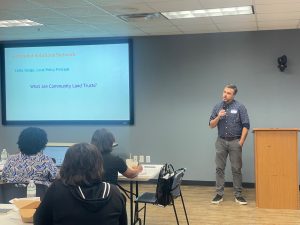
Colby Sledge of The Grounded Solutions Network presents crucial information on Community Land Trusts.
Nationally, Community Land Trusts (CLTs) and related shared-equity approaches demonstrate the potential of community ownership to stabilize neighborhoods, prevent displacement, preserve cultural identity, and strengthen community health. These models deliver multiple returns by operationalizing shared power and recirculating wealth locally, deterring speculation and supporting economic mobility.
Institutional alignment and leadership have been critical to mobilize assets such as land transfers, below-market capital, flexible pooled funds, and policy change to create the enabling conditions for shared ownership. Existing CLT models offer insights and lessons as 3BV expands its own model:
Unlike existing place-based efforts that often focus on single-sector housing or development projects, the new blueprint being spearheaded by 3BV aims to be comprehensive, encompassing various levers that create the vital conditions for neighborhoods to thrive. The recent cross-sector convening reinforced the value local partners articulated in going bigger: to forge a more expansive system for health, equity, and permanent shared prosperity, fully grounded in community ownership and multi-sector commitment.
Shaping the Future: Narrative and Measurement as Engines of Change
Advancing what is possible in Bordeaux begins with shaping the narrative. Local leaders recognize that the stories a community tells—and the stories told about it—directly influence policy, investment, and opportunity. Through engagement with residents, youth, and cultural anchors, an emerging vision has taken hold: a “Bordeaux–North Nashville Renaissance” grounded in self-determination, cultural heritage, and shared prosperity.
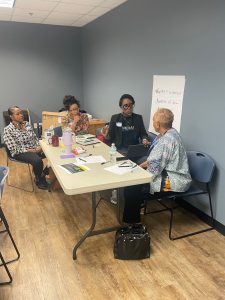
Participants envisioning and shaping their collective future in a focused small-group session.
The convening underscored the need to shift from deficit narratives to stories that emphasize community power, resilience, and long-term vision. Values-based narratives are not simply communications tools—they are strategic levers for alignment, investment, and policy change.
Narrative is paired with another essential pillar of 3BV’s strategy to advance community-driven data. Traditional approaches to assessing community needs often overlook the knowledge of those most impacted, resulting in investments that miss the mark—housing that displaces residents, commercial development that does not serve families, or services that fail to address childcare or mobility needs. In response, 3BV is committing to a data approach led by the community itself. Guided by frameworks such as Community Driven-Data Strategies to Transform Power and Place and tools to foster values-based narratives, 3BV is equipping residents, youth, and local organizations to generate, interpret, and use data that directly informs decisions about land, investment, and development.
These efforts build on a strong and growing foundation. These narrative and data efforts are supported by a growing foundation of partnerships and capacity-building efforts, including participation in the upcoming Lincoln Land Institute Vibrant Communities Fellowship, collaboration with Grounded Solutions Network, and a partnership with the Autodesk Foundation that enabled feasibility and visioning work showcased at its national Autodesk University conference.
Locally, 3BV is also investing in intergenerational leadership pathways, particularly through partnerships with HBCUs such as TSU and Meharry. These collaborations equip emerging leaders with skills in planning, community development, and design while honoring the wisdom of longtime residents.
Together, these strategies are paving the way for holistic investment, including land, policy, and blended capital commitments, required to bring the Whole-Community Land Trust to life.
A National Call to Action – Breaking Down Silos for Systemic Change
3BV is demonstrating what becomes possible when communities lead with vision and institutions align with long-term, community-defined priorities. By expanding the Community Land Trust into a Whole-Community Land Trust, 3BV is charting a path for place-based transformation grounded in shared prosperity, cultural identity, intergenerational leadership, and structural belonging.
For communities nationwide, the lesson is clear: addressing displacement, racial inequity, and uneven investment requires systems-level change, not one-off programs. It requires breaking down silos between government, health, business, philanthropy, and community organizations—and building governance and investment structures that reflect community values and long-term aspirations.
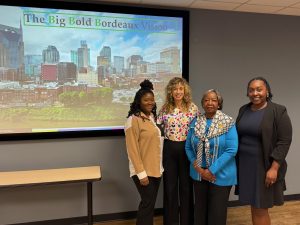
Key organizers, including Alexis and Colleen from BHPN, supported the 3BV cross-sector gathering.
As 3BV moves from vision to implementation, the work now centers on building the capital and policy foundation needed to steward land and shape development in ways that reflect community priorities. It also requires strengthening the physical and social infrastructure for well-being and expanding opportunities for housing, health, education, entrepreneurship, and cultural preservation so that residents can thrive across generations. Intergenerational leadership will remain central, with HBCUs, youth, faith institutions, and longtime residents helping to guide and sustain the model. And lasting change will depend on continued cross-sector commitment, as institutions align their assets and embrace the power-sharing necessary to advance a community-owned future.
As communities across the country seek durable, equity-centered approaches, Bordeaux is offering a clear example of what it takes: a holistic, community-led system that strengthens health, wealth, and belonging. The invitation now is for local and national partners to stand with Bordeaux in the long-term work of stewardship—supporting the conditions under which the community can continue to define, shape, and own its future.
Resources to Explore